
Rattan, Straw, and Wicker Bags: What’s the Difference?
If you’ve ever looked at a woven summer bag and wondered, “Is that rattan, straw, or wicker?” you’re definitely not alone.
I hear all three words used to describe the same kinds of natural-looking handbags, and I understand why. To most of us, they bring to mind a similar look: warm natural tones, beautiful texture, and an easy summer style that feels right at home on vacation, at brunch, at the beach, or with a favorite sundress.
Technically, though, rattan, straw, and wicker don't mean the same thing.
And because I use all of these words when talking about Shiva Urban bags, I thought it was worth explaining the difference—and why, in the world of handbags, the lines can get a little blurry.
What Is Rattan?
Rattan is an actual plant material.
According to the Food and Agriculture Organization of the United Nations, true rattans are climbing palms found primarily in tropical and subtropical regions of the Old World. Their long, flexible stems have traditionally been used for everything from baskets and mats to furniture. That flexibility and natural appearance are probably part of the reason the word rattan has become so closely associated with woven accessories.
When people search for handmade rattan handbags, a rattan purse, or a rattan crossbody bag, they are often looking for that structured, natural, basket-like appearance—even when the exact fiber used to create the bag may technically be something else.
Shiva Urban actually has one bag made from true rattan: Twisted Vines White, a round woven crossbody made from rattan and recycled plastic.
What Is Straw?
Straw also has a specific meaning.
Traditionally, straw refers to the dry stalks left from cereal crops such as wheat after the grain has been harvested.
But in fashion, “straw bag” has become a much broader description.
When I hear someone say “straw handbag” or “straw purse,” I picture a lightweight, natural-looking woven bag—the kind you reach for in spring and summer. It might be made from actual straw, but similar-looking handbags can be made from raffia, palm fibers, seagrass, ata, and other plant materials.
So while “straw” can refer to a specific material, shoppers also use it to describe a look and style.
What Is Wicker?
Wicker is a little different because wicker isn't a plant at all.
It refers to a type of woven work rather than one particular raw material. Smithsonian Gardens notes that wicker can be made using materials including rattan, willow, bamboo, and grasses.
That means a wicker piece can be made from rattan, but not everything called wicker is necessarily made from rattan.
For handbags, I think a wicker bag has simply become another familiar way to describe a bag with that beautiful basket-like weave and natural texture.
And Then There Is Ata
This is where Shiva Urban bags come in.
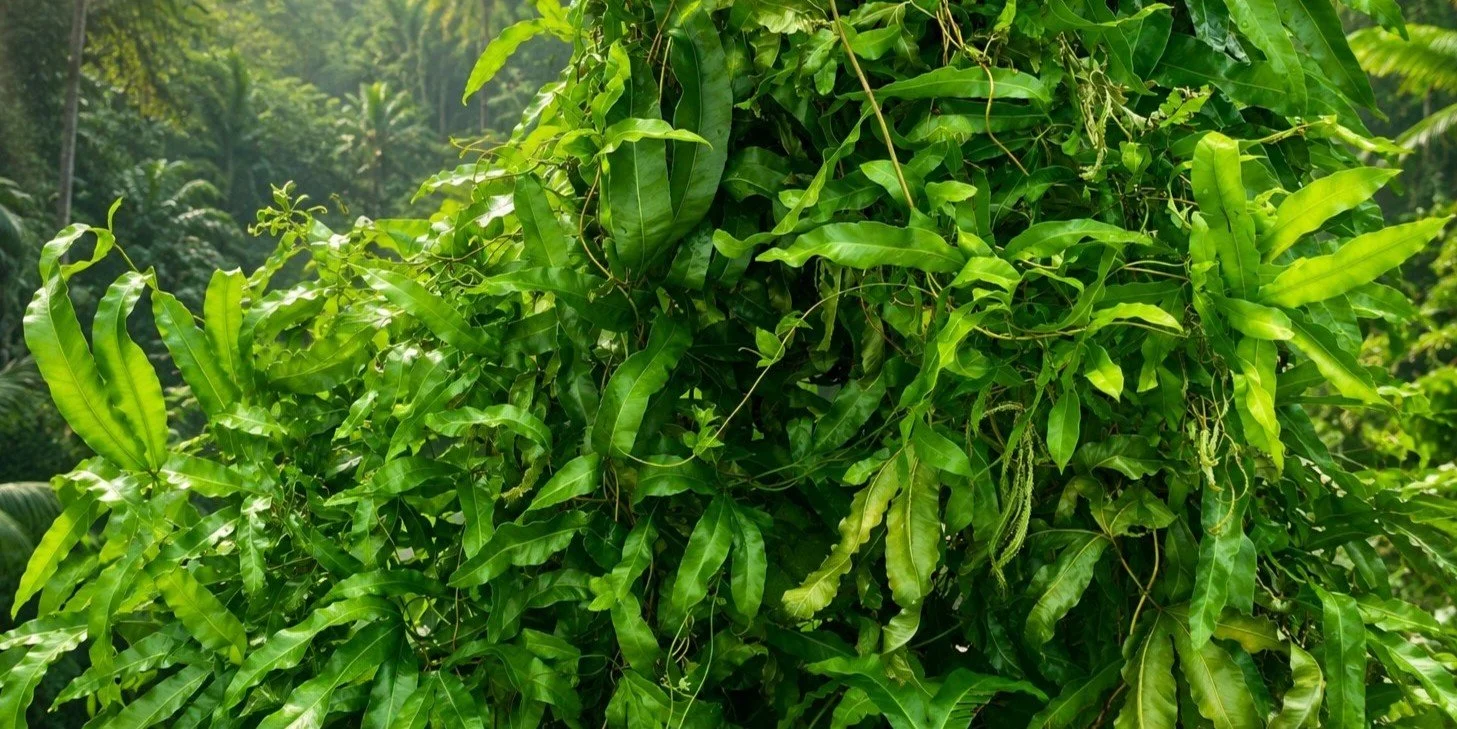
Except for Twisted Vines White, Shiva Urban bags are handwoven from ata, botanically known as Lygodium circinnatum.
Ata is neither true rattan nor traditional straw. It is actually a climbing fern native to tropical and subtropical Asia and the western Pacific. Below is a picture of ata vines.
And here’s what I find especially interesting: even the experts recognize how confusing the names have become. A 2023 study published in Economic Botany examined Bali's international ata basketry trade and noted that Lygodium circinnatum products are marketed under many different names—including “grass,” “rattan,” “reed,” “vine,” and “ata.”
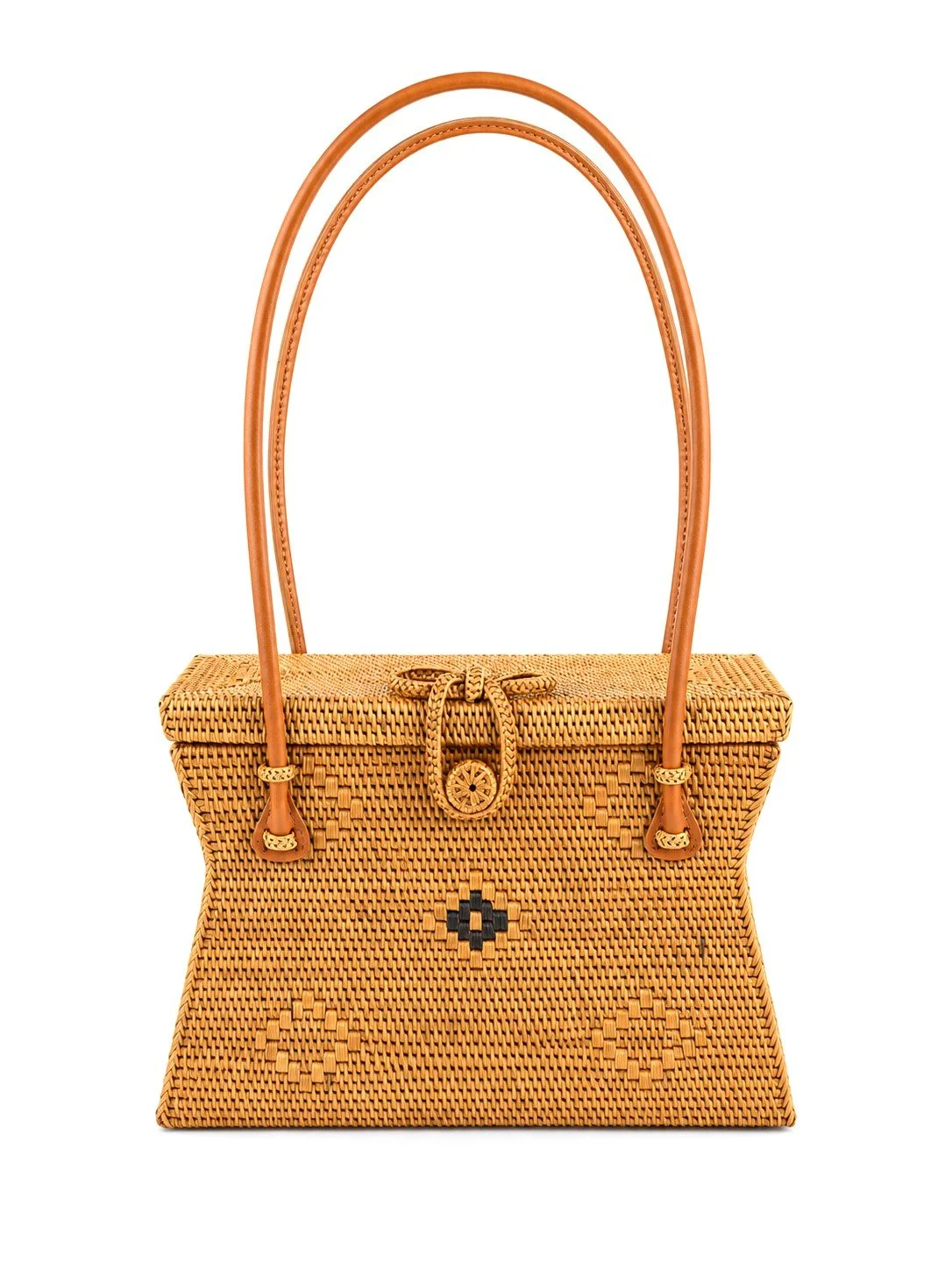
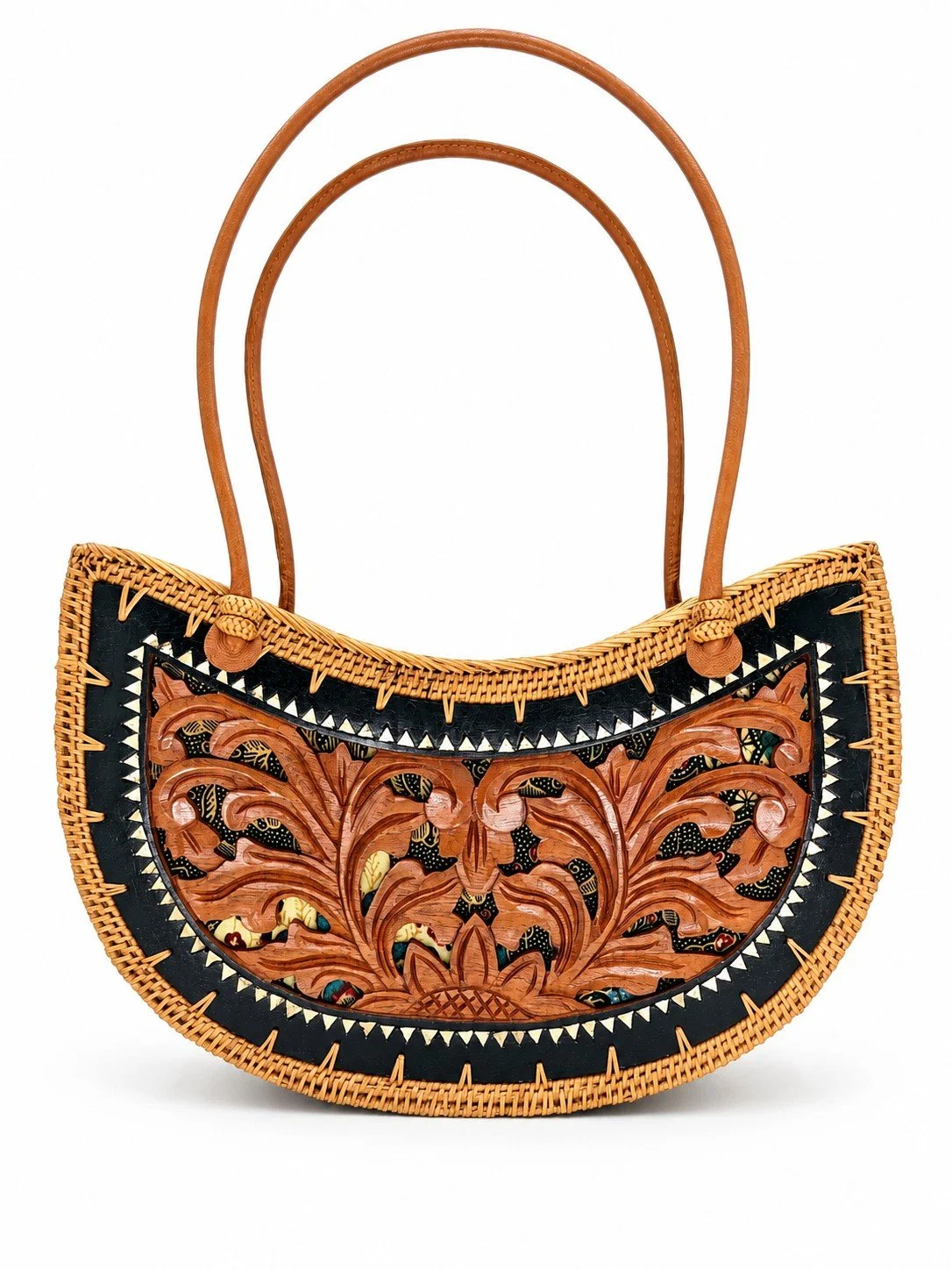
So when my customers call a Shiva Urban bag a rattan bag, straw bag, or wicker purse, I certainly don't correct them. I use many of those terms myself. Take Retro Rattan. Despite its name and classic rattan-bag appearance, it is handmade from natural ata. The name describes a style customers immediately recognize, while ata tells you what the bag is actually made from.
The same is true of Weekend Getaway, one of our structured top-handle bags. It has the warm, basket-like appearance many people would naturally call rattan, straw, or wicker, but it is handwoven from ata.
So What Should You Call a Shiva Urban Bag?
If we want to be technically precise, Shiva Urban bags are handwoven ata bags.
But I also know that ata isn't a familiar word for most shoppers. People are much more likely to search online for handmade rattan handbags, straw bags, wicker bags, woven handbags, or summer woven bags. And that's perfectly understandable.
To me, these words have become part material, part technique, and part fashion language. They help us describe a style we recognize even when the fibers themselves are different.
That's why you'll see me use terms such as rattan handbags, straw purses, wicker bags, and woven bags when talking about Shiva Urban. I want people searching for this beautiful style of handbag to find us—but I also want to share the story of what our bags are actually made from.
The Difference That Matters Most to Me
I enjoy knowing the technical details, but when I'm choosing a bag, what matters most to me is how it looks, how it was made, and the story behind it. That's what I love about Shiva Urban bags.
Each one is handmade in Bali by skilled artisans, with natural texture and small variations that remind you it wasn't produced by a machine.
So whether you discovered Shiva Urban while searching for a rattan handbag, straw purse, wicker bag, or handmade woven bag, you're in the right place.
And now you know a little more about what those words really mean—and what is actually woven into your bag.
A spacious top-handle purse with an intricate geometric weave and distinctive silhouette, Bali Breeze is a statement-making bag that stands apart from the ordinary and naturally draws compliments.
WHY YOU’LL LOVE IT:
Unique shape & eye-catching geometric weave
Batik-lined interior with secure drawstring closure
Handmade by Balinese artisans
Handwoven from durable natural vine
Lightweight but sturdy
SIZE & FIT:
Size: 13"L x 4"W x 9"H (excluding the handles)
Fits: Small tablet, full-size wallet, smartphone, sunglasses case, small makeup bag, and other everyday extras
SHIPPING & RETURNS:
Ships from Florida within 1 business day
Free U.S. shipping — Shipping details
Easy 14-day returns/exchanges — Return & exchange details
Each bag is handmade in Bali and beautifully unique, so slight variations in color, size, and pattern are part of its character.
You may also notice a subtle toasty aroma from the traditional smoking process—a hallmark of an authentic Bali bag that naturally fades over time.